Using the Mix Sequencer on the ARP2500. I'm sure I've said it before, but this is a really cool module! It allows you to take up to 8 audio sources and it then steps through them in sequence. So its great for rhythmic patterns and the like. Here I am putting various different sounds through such as white noise on one channel, a filtered VCO through another, etc. Nice eh?
Every so often something comes along that is so awesome that it's scope defies the limitations of a simple blog post, but here goes anyway. I have just produced and co written a track called Talk (Are You Listening To Me?) that is a collaboration between John Foxx, Me (i.e. The Maths) and Gary Numan. Let me repeat that: I have just produced a track that is a collaboration between John Foxx & The Maths and Gary Numan!
Whats more, I'm not sure GN has been on a track featuring so many vintage synths since he recorded Cars! (well, maybe a bit later than that, but you get the point). I do know that he is a big fan of Foxxy, and is on record as saying John was a huge influence on his early synth-based work. So I guess it makes sense that he would want to get involved in this collaboration, which is essentially a reworking of our original track Talk from our Shape Of Things album. So I sent Gary the individual tracks from Talk, and he added a brand new vocal part and some synth drones and then I added some more synth parts and mixed it all at Memetune Central. It will be coming out in a little while on a new album of JF collaborations including some new JF&TM tracks on Metamatic Records. You can pro-order it here
Now for some detail about the track itself just in case there are any geeks reading this blog. Here is a list of the synths used and some pictures and a video:
MOOG MODULAR. Used for the initial low sequenced parts and some drones
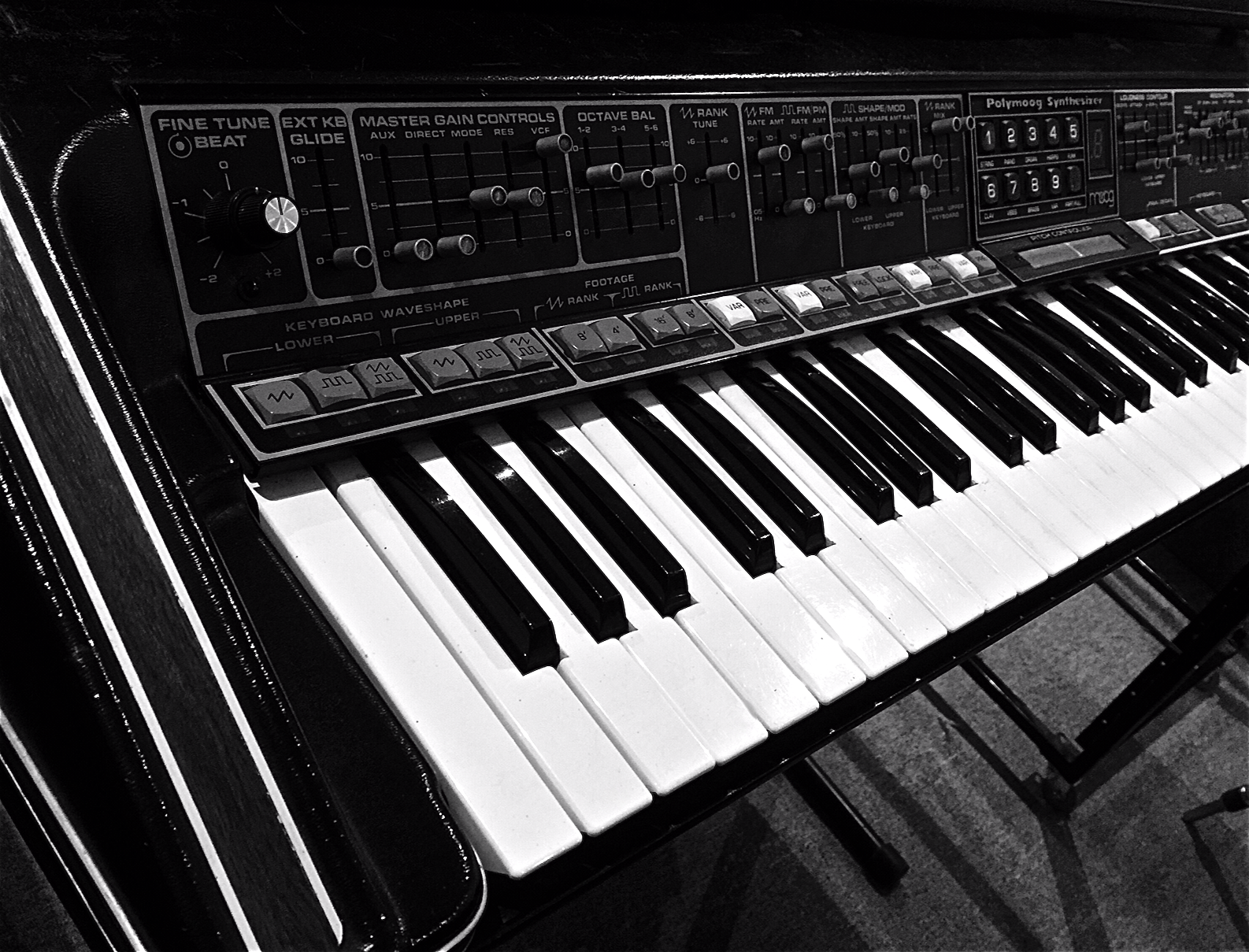
MOOG POLYMOOG - Layered top lines and main melodies
LINN LM1 & EHX DRM16 DRUM MACHINES - DRM16 comes in first, then the Linn does the main drums half way through
PAIA MODULAR - The weird sequence that comes in half way through
ROLAND JX3P - Layered top lines and main melodies
OBERHEIM FOUR VOICE - Layered top lines and main melodies
GRATUITOUS STUDIO PIC
Here is a little video of me playing a top line on the Polymoog:
There were also a plethora of vintage delay, flanger and phaser units used, as well as vintage EMT Plate and Lexicons because as Gary said '..the vocals need a shit load of reverb on them!'. So there you have it, hope you like the track when it comes out!!
I just got a crazy new FX unit - it's from 1978 making it one of the very first digital units available. Its really neat because it is a combination of strange lo-fi reverb and three delay lines and all the parameters are voltage controllable. So you can switch on and off the delays, select which delay is active and stuff like that. In this video I am controlling it from the Roland 100M. The sequencer is triggering a modified DR55 drum machine which is going into the DRS78, and the last stage of the sequencer is switching between reverb and delay and also switching the delays over. Pretty cool!
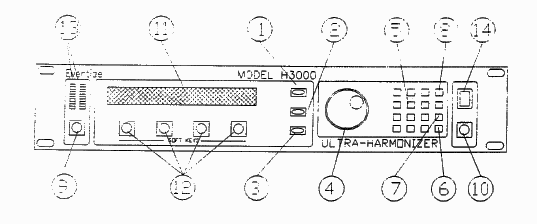
Here is a comparison of four of my favourite big and old digital reverbs: Yamaha Rev1, Lexicon 224, Roland R880 and Eventide H3000, recorded in that order. I tried to get similar settings on them, so they all have decay times of around 10 seconds. You really need to listen on headphones to hear the subtle differences between them. I thought the mighty Oberheim Four Voice would be a good way of testing them. Which is your favourite?
Tara and Maf popped round the other day, and brought along Beth Jeans Haughton (I mixed her first EP here a while ago) and her friend Dick O'Dell who were both on very good form. What a lovely evening. Pics by Maf
Here I bring you a couple of videos featuring the EMS Polysynthi. Its one of the rarest synths and some people bash it as being awful, but I really love it and all its quirks. Here are some of the reasons its mental: 1] all the knobs are backwards; 2] to implement the aftertouch you press the whole keyboard down about an inch; 3] its got a built in digital delay; 4] look at it?
Its quirks make it a very unique thing and thats why I think it is so cool. In the first video I am using the aftertouch to control the filter frequency. Its very responsive and touchy-feely! In the second vid I am using the VCS3 alongside it - going into the Polysynthi input and using its filter and envelopes and also the delay. I am going to do more of these so viddi well little brother, viddi well!
The Serge Modular makes a very good drum machine. All modular synths do! This is me tweaking a clap sound for a remix I'm doing. The other drum sounds were recorded earlier from the Serge, using MIDI to clock things
Here's a patch on the Roland 100m. I wanted to explore the 172 modular FX module a bit and see if I could push it a bit deeper than its normal duties as a kind of simple doubler effect. The module itself has two functions because the top half is a really nice phaser, the middle is the analog delay and the bottom has an LFO. The analog delay has no feedback and its got a very short delay time (too short for distinct repeats to be created) so I used some other 100m modules to enhance it. First I set up a sequence using two VCOs and the ring modulator, an envelope and a VCA. Then I sent the output to a multiple so I could send it to both the output mixer and the input to the analog delay. Then I fed back the delayed output to a second mixer to produce repeated delays. To overcome the limited delay time I sent the CV input to the delay a racking great voltage and managed to produce the following results. Note that when the delay time is increased the clock driving the delay circuit becomes audible as a high pitched whine so I sent the output of the delayed signal to a LPF to filter it out. This was then mixed with the dry signal, and voila: